The project aims to strengthen The Gambia’s capacity to meet international food safety and SPS standards, with a focus on improving compliance along the cashew value chain, a priority value chains for the country. Despite strong export potential, limited regulatory capacity, weak laboratory services, and low adoption of food safety management systems constrain market access. The project will update national food safety legislation, strengthen risk-based inspection, and enhance testing and certification services through accreditation and capacity building. It will also support producers and processors to meet prerequisite programmes and achieve Hazard Analysis and Critical Control Points (HACCP) certification. Developed through a multi-stakeholder process using the STDF P-IMA framework (STDF/PPG/921), the project targets high-impact SPS investments that could unlock significant export revenue and strengthen The Gambia’s position as a reliable supplier of safe, high-quality cashew products, with broader benefits for other value chains such as groundnuts.
The Gambia, a West African country of approximately 2.76 million people, relies heavily on a small number of agricultural exports—particularly cashews, groundnuts and fish products—which account for a significant share of national export earnings. The cashew sector alone involves an estimated 14,000 farmers, with raw cashew nut exports exceeding 32,000 tons in 2023, mainly to markets such as India, Viet Nam and China.
Despite this potential, The Gambia faces persistent challenges in meeting international food safety and SPS requirements. These include weak regulatory capacity, limited laboratory services, and the absence of internationally recognized conformity assessment bodies. As a result, producers and processors face difficulties in applying good practices and obtaining certifications such as HACCP, limiting access to higher-value markets. An STDF-funded Project Preparation Grant applied the P-IMA framework to prioritize national SPS investments, identifying capacity building for SPS compliance in the cashew value chain as the country’s highest-impact option, with strong potential to unlock export gains. Addressing these constraints is critical to strengthening confidence in Gambian cashew exports and supporting more inclusive growth across the agricultural sector.
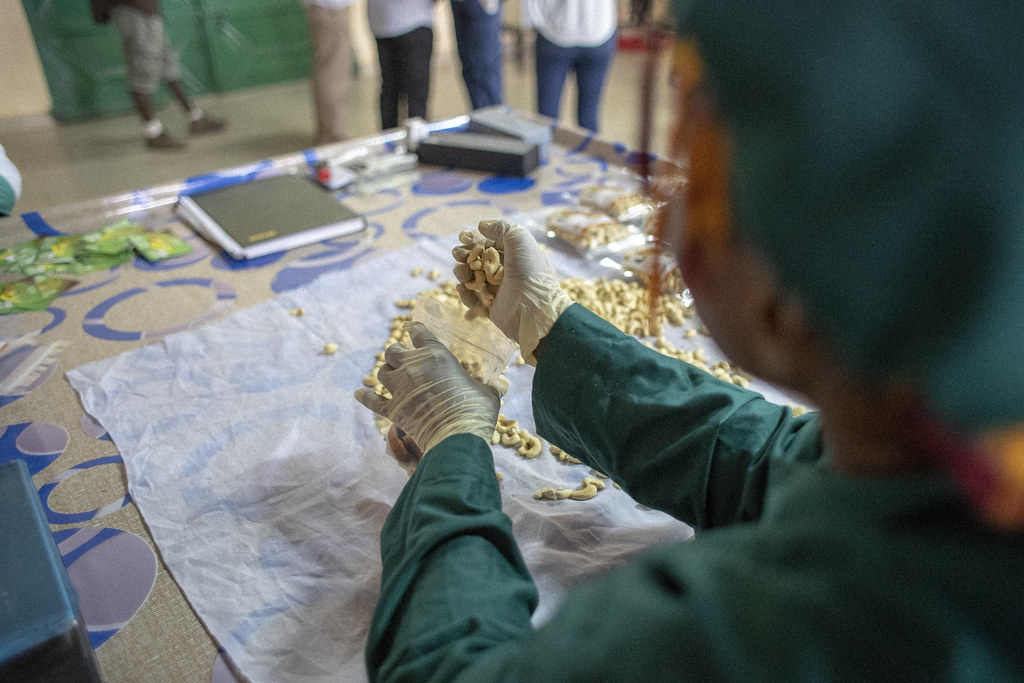
Image ©Ollivier Girard/EIF